
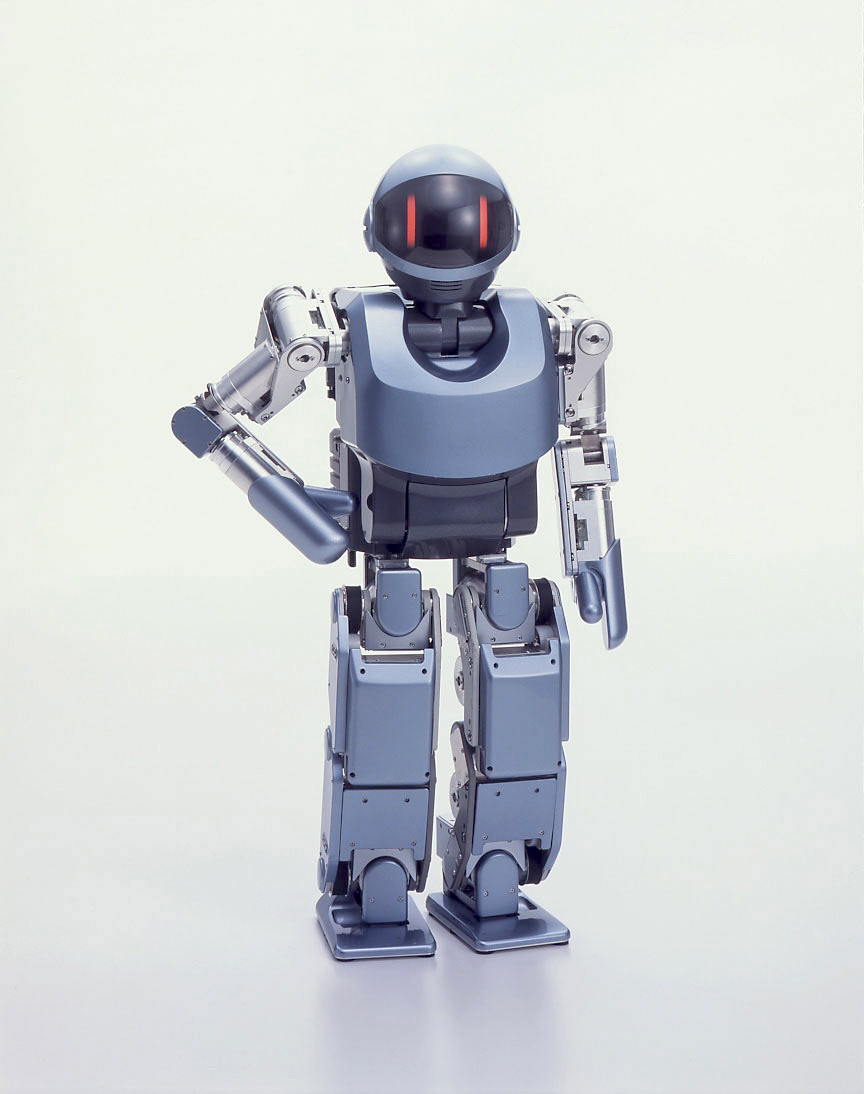
Announced 21st November 2000, the SDR-3X was the first humanoid robot that Sony had unveiled publicly. While there are prior versions of the robot, including the less friendly looking predecessor SDR-3, it wasn't until the arrival of SDR-3X that Sony made their intentions known to the press that they wanted to focus on developing humanoid robots alongside the current aibo offering. It was apparent that the team at Sony were aiming to eventually create a robot that could be sold at retail with its small form factor which made it cheaper to produce. It also focused mainly on being an entertainment robot rather than one that would do household chores.
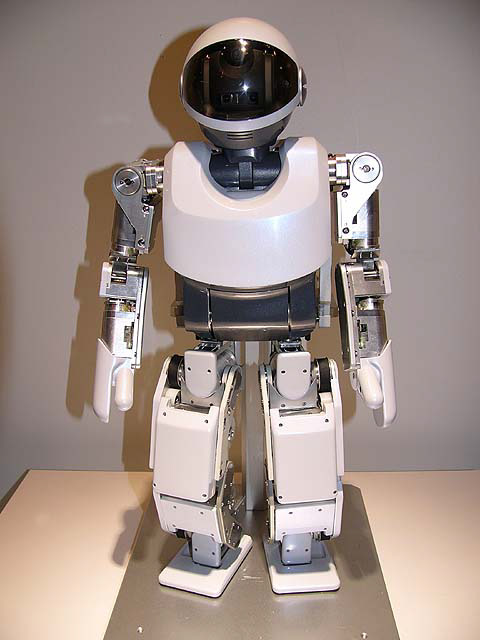
Like Asimo, the design was loosely modelled after a spacesuit, complete with helmet-like head shape, clear visor to hide various sensors while providing simple LED eyes to create a friendlier appearance. The hands are moulded shapes, designed primarily to help the robot push itself upright rather than them being functional hands for manipulation.
Despite the more basic appearance, the robot can still carry out many demonstration functions seen in QRIO such as playing football, dancing, being able to balance on one leg, getting up after a fall and its even able to sit down and spread its legs out. However it seems the robot lacked any real autonomous functionality, relying on commands to be sent to it from a motion choreography programme via WLAN. It did feature basic voice recognition and image recognition via a 180,000 pixel 1/5-inch CCD - two things that would be greatly expanded on with SDR-4X. The robot is equipped with 2 MemoryStick card slots for the main operating software. Apparently the main computer boards inside of the SDR-3X are the same as that used in an ERS-210.
Despite the more basic appearance, the robot can still carry out many demonstration functions seen in QRIO such as playing football, dancing, being able to balance on one leg, getting up after a fall and its even able to sit down and spread its legs out. However it seems the robot lacked any real autonomous functionality, relying on commands to be sent to it from a motion choreography programme via WLAN. It did feature basic voice recognition and image recognition via a 180,000 pixel 1/5-inch CCD - two things that would be greatly expanded on with SDR-4X. The robot is equipped with 2 MemoryStick card slots for the main operating software. Apparently the main computer boards inside of the SDR-3X are the same as that used in an ERS-210.
The main difference is the robot's use of 3 types of custom made actuators placed throughout the body's 24 joints. This allows for dynamic whole body joint coordination thats key for upright walking. Unlike QRIO who can run, the SDR-3X could only walk at 15 meters per minute.
The SDR-3X was first shown to the public at ROBODEX 2000 held in Yokohama from November 24th to the 26th, where it gave stage performances demonstrating all of its key features. Its one of the very few times this model has been shown at events.
There were multiple units in existence sporting different colours - metallic pink, space grey, silver and MAZORIA Matterhorn white. They haven't been seen for over 10 years so it is safe to assume they are in Sony's private archive or have been scrapped.
2000年11月21日に発表されたSDR-3Xは、ソニーが初めて公開したヒューマノイドロボットでした。このロボットには、見た目がやや劣る前身のSDR-3など、以前のバージョンが存在していましたが、ソニーが現行のaiboと並行してヒューマノイドロボットの開発に注力する意向を報道陣に明らかにしたのは、SDR-3Xの登場後でした。ソニーの開発チームは、小型で製造コストを抑え、最終的には小売販売可能なロボットの開発を目指していたことは明らかでした。また、家事ロボットというよりも、エンターテイメントロボットとしての役割を主に担っていました。
ASIMOと同様に、SDR-3Xのデザインは宇宙服をモデルにしており、ヘルメットのような頭部、様々なセンサーを隠す透明なバイザー、そしてより親しみやすい外観を演出するシンプルなLEDアイを備えています。手は成形されており、操作のための機能的な手というよりも、ロボットが自立するのを助けることを主な目的としています。
よりベーシックな外観にもかかわらず、このロボットはQRIOに見られる多くのデモンストレーション機能を実行できます。例えば、サッカーをしたり、ダンスをしたり、片足でバランスを取ったり、転倒後に起き上がったり、さらには座って足を広げたりすることも可能です。しかし、このロボットには真の自律機能は備わっておらず、モーション振り付けプログラムからWLAN経由で送信されるコマンドに依存しているようです。基本的な音声認識と、18万画素の1/5インチCCDによる画像認識機能を備えており、これら2つの機能はSDR-4Xで大幅に拡張されました。ロボットには、メインOSソフトウェア用に2つのメモリースティックカードスロットが搭載されています。SDR-3Xの内部にあるメインコンピュータボードは、ERS-210で使用されているものと同じようです。
よりベーシックな外観にもかかわらず、このロボットはQRIOに見られる多くのデモンストレーション機能を実行できます。例えば、サッカーをしたり、ダンスをしたり、片足でバランスを取ったり、転倒後に起き上がったり、さらには座って足を広げたりすることも可能です。しかし、このロボットには真の自律機能は備わっておらず、モーション振り付けプログラムからWLAN経由で送信されるコマンドに依存しているようです。基本的な音声認識と、18万画素の1/5インチCCDによる画像認識機能を備えており、これら2つの機能はSDR-4Xで大幅に拡張されました。ロボットには、メインOSソフトウェア用に2つのメモリースティックカードスロットが搭載されています。SDR-3Xの内部にあるメインコンピュータボードは、ERS-210で使用されているものと同じようです。
主な違いは、ロボットの24個の関節全体に3種類のカスタムメイドアクチュエータが配置されていることです。これにより、直立歩行の鍵となる全身の関節の動的な協調動作が可能になります。 走れるQRIOとは異なり、SDR-3Xは1分間に15メートルしか歩くことができませんでした。
SDR-3Xは、11月24日から26日まで横浜で開催されたROBODEX 2000で初めて一般公開され、主要機能のすべてを披露するステージパフォーマンスが行われました。このモデルがイベントで公開されたのは、非常に稀なケースの一つです。
メタリックピンク、スペースグレイ、シルバー、MAZORIAマッターホルンホワイトなど、異なるカラーの複数のモデルが存在していました。10年以上もの間、これらのモデルは見られていないため、ソニーの個人アーカイブに保管されているか、廃棄されたと推測できます。
Official Reveal Video for SDR-3X
Main specifications of the prototype "SDR-3X"
CPU - 64-bit RISC processor (x2)
main storage - 32MB DRAM (x2)
operating system - Aperios (Sony's proprietary real-time OS)
Robot Architecture - OPEN-R
Control program supply medium - 16MB Memory Stick (x2)
Joint freedom
Neck: 2
degrees of Torso: 2
degrees of freedom Arms: 4 degrees of freedom (x2)
Legs: 6 degrees of freedom (x2) (24 degrees of freedom in total)
Built-in sensors - Image Input180,000 pixel 1/5 inch CCD color camera
Voice input - Microphones (x2)
Distance detection - Infrared distance sensor
Acceleration detection - 2-axis acceleration sensor
Angular velocity detection - 2-axis angular rate sensor
Contact Detection - Contact sensors (x8)
Audio Output - speaker
Input/output sectionPC Card slot (Type II)
Memory Stick slot (x2)
Walking speed Approximately 15 m/min
mass - Approximately 5.0 kg (with battery and memory installed)
External dimensions (height, width, depth) - Approximately 500 x 220 x 140 mm
CPU - 64-bit RISC processor (x2)
main storage - 32MB DRAM (x2)
operating system - Aperios (Sony's proprietary real-time OS)
Robot Architecture - OPEN-R
Control program supply medium - 16MB Memory Stick (x2)
Joint freedom
Neck: 2
degrees of Torso: 2
degrees of freedom Arms: 4 degrees of freedom (x2)
Legs: 6 degrees of freedom (x2) (24 degrees of freedom in total)
Built-in sensors - Image Input180,000 pixel 1/5 inch CCD color camera
Voice input - Microphones (x2)
Distance detection - Infrared distance sensor
Acceleration detection - 2-axis acceleration sensor
Angular velocity detection - 2-axis angular rate sensor
Contact Detection - Contact sensors (x8)
Audio Output - speaker
Input/output sectionPC Card slot (Type II)
Memory Stick slot (x2)
Walking speed Approximately 15 m/min
mass - Approximately 5.0 kg (with battery and memory installed)
External dimensions (height, width, depth) - Approximately 500 x 220 x 140 mm